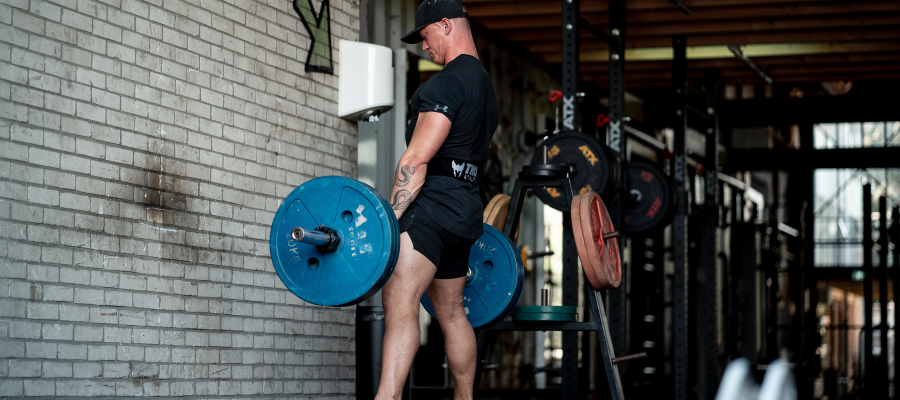
If you walk into the gym and ask some random people what the best exercise for muscle growth is, undoubtedly a few will say; The Deadlift. In this article, you will read everything about deadlifting and whether you should do it for your goal.
Sounds pretty logical, right? You lift dead weight off the ground and use almost every muscle in your body, so people think this is the King of muscle growth.
UNFORTUNATELY, the Deadlift is far from ideal for muscle growth and actually does very little for your muscle growth. One of the reasons the Deadlift is not optimal for muscle growth is that you miss the complete eccentric phase of the lift. (This is the phase where you ‘controlledly’ lower the weight).
If you Deadlift ‘heavy’ or do a 1RM, you don’t lower the bar in a controlled and slow manner. You can, but this puts enormous stress on, for example, your lower back.
Alright, now that we've cleared this up, there is also something called a Fitness Fatigue Model (Simply put, this means how much fatigue an exercise creates in exchange for, for example, muscle activation/muscle growth).
With Deadlifting, you create a lot of fatigue in exchange for little muscle growth.
For many, the Squat is also not the most optimal ‘Quad builder’ because you also build up high fatigue with a Squat, and your lower back often gets tired before your Quads.
A Hack Squat or Leg Press would, for example, be a ‘better’ exercise for your Quads.
So, there is some merit in considering which exercises you choose and which muscle groups your exercises target in a workout/routine.
You don't want to include only compound exercises in your routine because they cause enormous fatigue, so add some more isolating exercises as well, and I'm not just talking about a Tricep Pushdown.
Alright, as you can see, I sometimes get a bit long-winded and digress to other topics. Back to the Deadlift and your goal.
In this blog, I will discuss the following topics with you:
- Do you need to Deadlift for your goal?
- Conventional Deadlift
- Sumo Deadlift
- Different Types of Grip
- How can you improve your grip?
- Most common mistakes
- Belt or no belt?
- Which variation is suitable for you?
Do you need to Deadlift for your goal?
I'll briefly touch on this; you now know that the Deadlift is not optimal for muscle growth.
So if you want to achieve maximum muscle growth, you don't have to Deadlift. Of course, this doesn't mean that if you want to Deadlift, you shouldn't, BUT....
There is some merit to NOT doing this.
Why? As mentioned above, the Deadlift causes quite a bit of fatigue. If you see your 'recovery' as a full battery and you do a very intense Deadlift session that drains your battery halfway, you only have half a battery left that doesn’t recharge quickly.
So if you do NOT Deadlift and instead do more Quad or Hamstring volume, you probably accumulate less fatigue and will recover better, which results in being able to do more volume.
And more volume (provided the intensity is high enough and you can recover from it) means more growth.
However, if you are a Powerlifter or want to compete in a Powerlifting competition, then you MUST Deadlift.
Okay, if that’s clear, you can still choose between the Conventional Deadlift and the Sumo Deadlift. Which one suits you I will come back to later; spoiler alert: it’s not black and white.

Conventional Deadlift
You start the Conventional Deadlift with your feet positioned in a way that allows you to generate as much force as possible. Yes, this all sounds nice, but how do I do that?
I once got a tip to jump, and the way your feet land is your Conventional Deadlift position.
Of course, you can tweak this slightly as you get better; it’s an estimate and doesn’t have to be exact. Generally, it’s around 'shoulder width.'
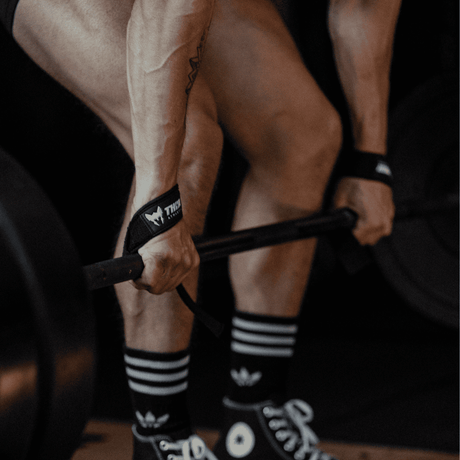
Your hands are usually just outside your shins. When you pull, you want to pull the bar close to your shins (which is why some people wear Deadlift socks) to avoid scraping your shins.
You want to pull the bar in a straight line; the shortest path is always a straight line..
Sumo Deadlift
This variant of the Deadlift is a variation of the Conventional Deadlift where you stand with your legs wider apart.
You stand wider than in a Conventional Deadlift, shortening the ROM (Range of Motion), which can be an advantage for pulling more weight because you have a shorter distance to pull.
Because the hip position in the Sumo Deadlift is much lower, this variant resembles a reverse Squat more.
Because you often start in a more 'vertical' position with this variant, the stress on your lower back is less than with a Conventional Deadlift.
I add 'often' because this is not the case for everyone; some people do a kind of 'mix,' where they stand slightly wider than a Conventional but narrower than a 'normal' Sumo Deadlift.
You’ll also see people (including myself) who use a relatively ‘horizontal’ starting position even with a Sumo variant. Everyone’s form is different.
At the starting position of this variant, the ‘intention’ is for your ankles to hook on the floor and your knees to be directly above your ankles, to generate optimal power.
With the wider stance of your feet, you grip the bar inside your feet, unlike the Conventional style.

Different types of Grip
Alright, if your foot position is correct and you roughly know where to place your hands (you can adjust this as you get better at Deadlifting), let’s look at HOW you grip the bar, because there are several ways to do this.
Double Overhand Grip:
With this grip, you hold the bar overhand with both hands, as the name suggests. This grip will immediately train your grip strength significantly, making it stronger over time.
This grip can be a bit more challenging when pulling heavy weights and can therefore be a limiting factor, but we can solve this. More on that later.
Mixed Grip:
With this grip, you hold the bar overhand with one hand and underhand with the other; for many people, this is often the strongest grip position and is therefore commonly used. Generally, you hold the bar overhand with your strongest hand, but try it out and see what works best for you.
A downside of this grip is that at some point a kind of ‘imbalance’ can develop because you’re actually holding the bar in two different ways.
How can you counter this?
By switching your grip every so often. If you always grab the bar overhand with your right hand, try doing it with your left hand for a few weeks, and vice versa.
How can you improve your grip?
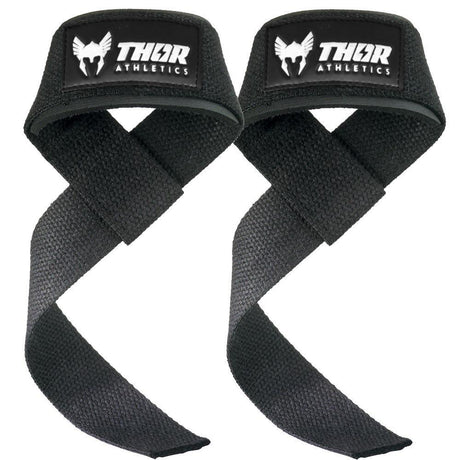
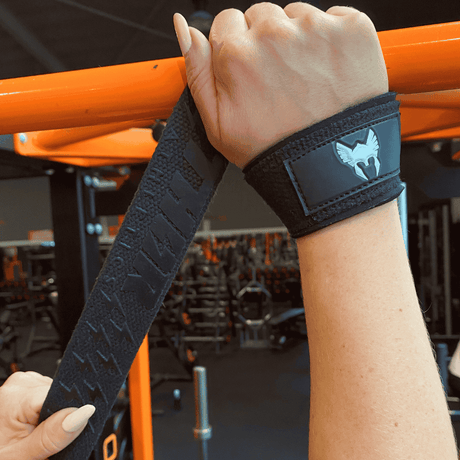
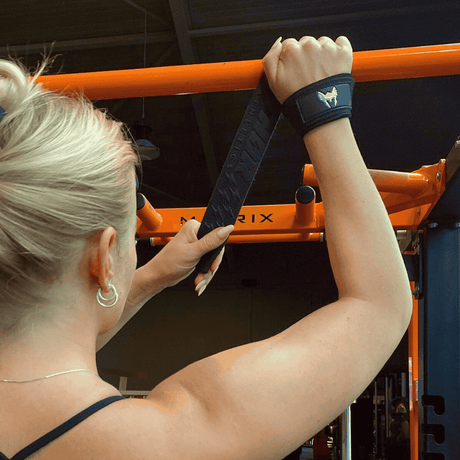
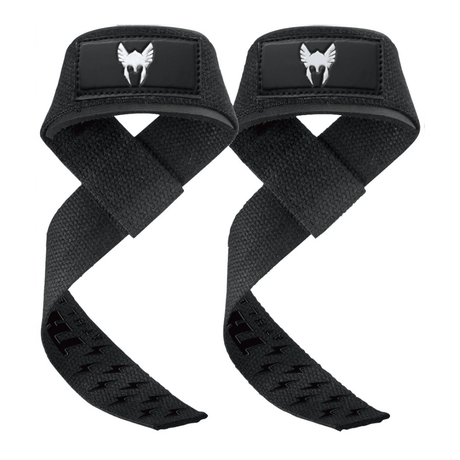
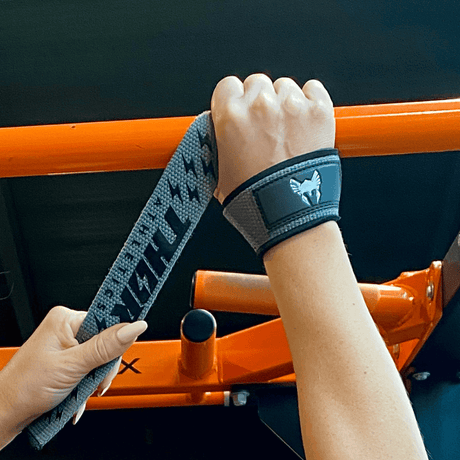
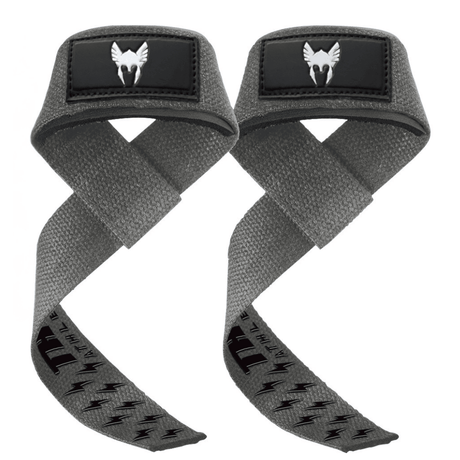
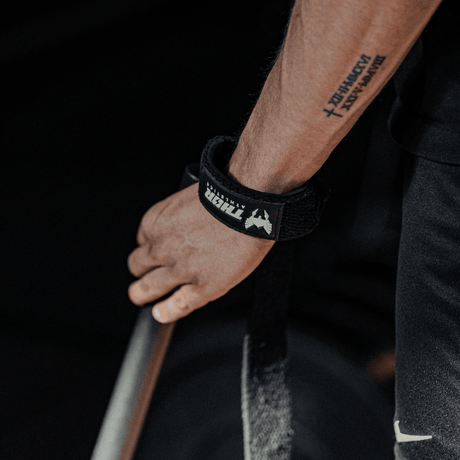
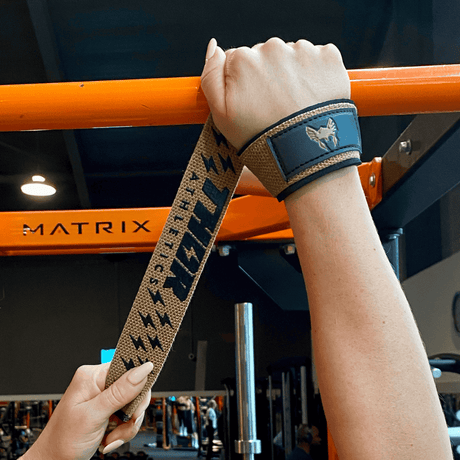
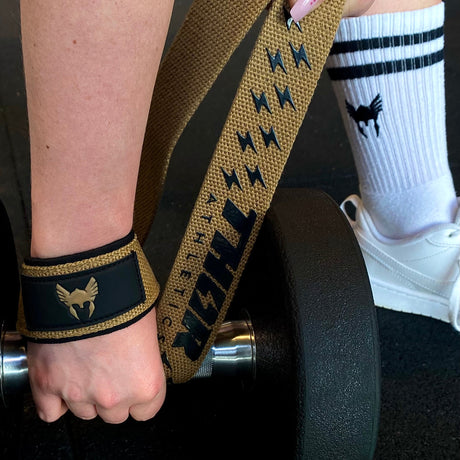
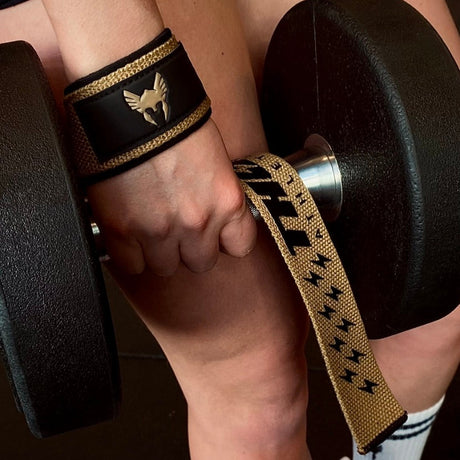
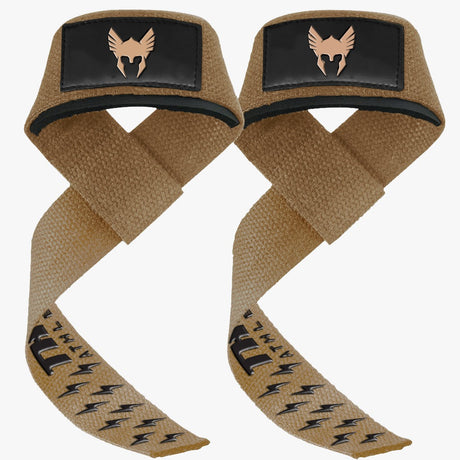
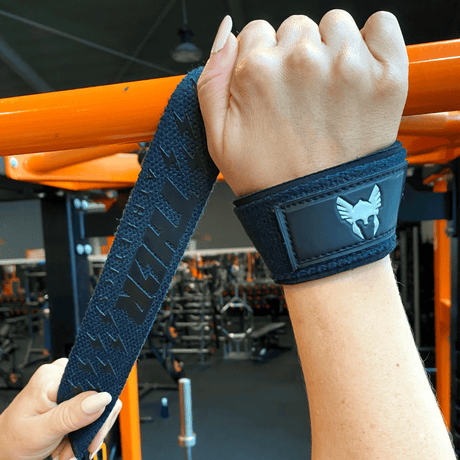
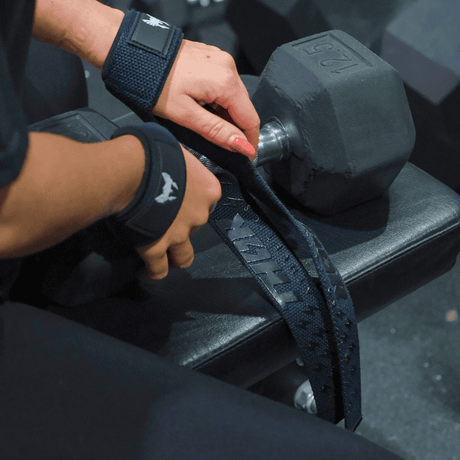
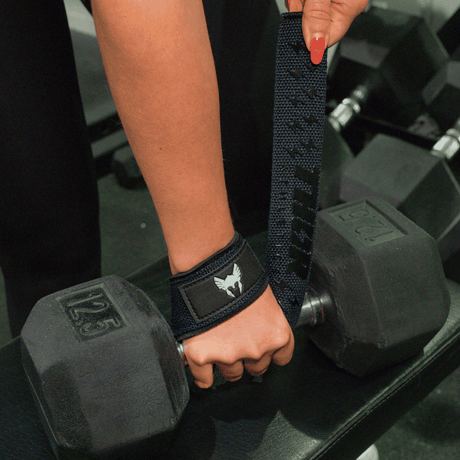
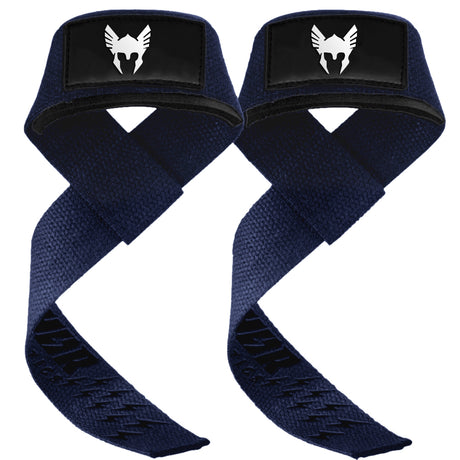
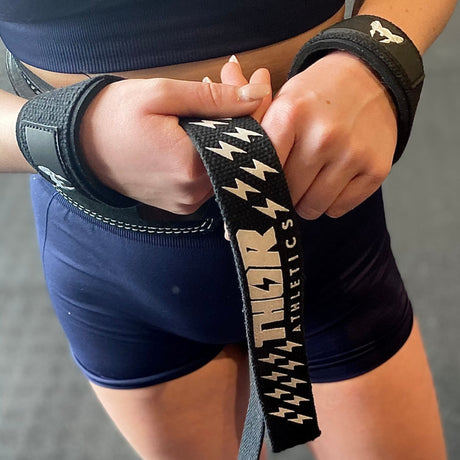
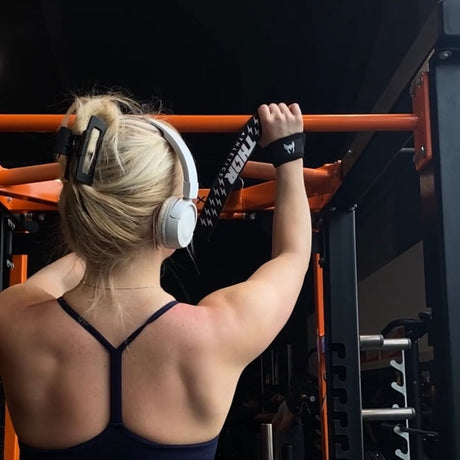
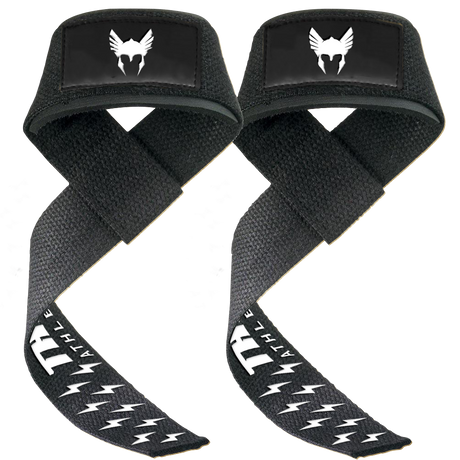
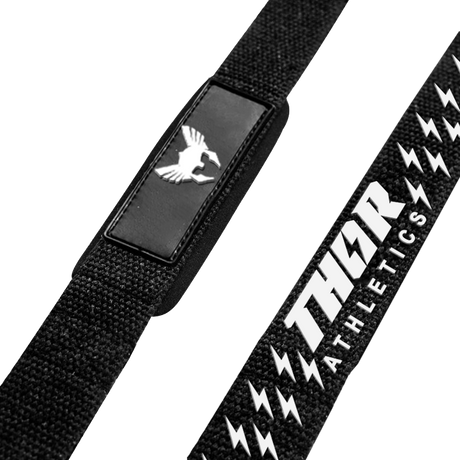
Back to how you won’t lose your grip with a Double Overhand. For this, you can use Lifting Straps. Also, check the video below if you don’t know how to use Lifting Straps.
Use Magnesium (Powder or liquid)
Magnesium makes your hands very dry, which helps you get a better grip. However, keep in mind that not every gym likes having white powder all over the floor. Nowadays, you can also buy liquid magnesium, which creates much less mess.
Most common mistakes
Rounding of the lower back;
This happens because you lose tension in your abdomen, which then puts extra strain on your spinal vertebrae.
You obviously want to avoid this as much as possible because it can cause injuries, and you don’t want that.
You want your body fully tense before you pull the weight so you stand completely stable and can push as much weight as possible.
No ‘Slack’ in the bar;
A bit hard to explain, but sometimes when you see someone deadlift, they walk to the bar, grab it, and pull it with a kind of ‘jerk.’ You want to create tension first before you start pulling.
You actually want to slightly rotate your elbows inward when you grip the bar and do a kind of ‘pull’ without the bar moving. Basically, put yourself and the bar under tension before you start pulling the weight off the ground as if your life depends on it.
Hips coming up first;
Sometimes you see someone deadlifting where you clearly see the hips shoot up before the weight leaves the ground, which you don’t want.
It might be a good idea to raise your hip start position slightly so the bar and your hips move together.
The bar moving all over the place;
This is a point that is often done ‘wrong’: people start pulling but the bar is 3-5cm away from their shins in the air. You want to create a position so that when you pull the bar up, it moves along your shins.
Belt or no belt?
Just to be clear, when we talk about Belt or No Belt, we’re still talking about the Deadlift. Not about Bicep Curls in the Squat Rack where a belt is also sometimes used.
That said, let’s talk about the belt and whether you ‘should’ use it or not.
The goal of a Powerlifting Belt is to provide as much stability as possible so you can move as much weight as safely as possible.
The belt needs to prevent the spine from moving, so it must be extremely tight when you engage your ‘Brace’ (basically expanding your abs against the belt).
The belt should be tight enough that you really don’t want to wear it for too long; it’s not a Louis Vuitton belt, Bro.
Fun Fact; Generally, people can pull about 5% more weight with a Powerlifting Belt than without. Sometimes it’s MUCH MORE, but sometimes it’s LESS. This is very personal..
People often feel much safer with a belt on and then go for YOLO 1RMs, which actually makes it more unsafe than safe. Make sure your technique is fully in order before you even think about using a belt.
So, BELT OR NO BELT?
If your form is ‘perfect’ or at least very good and you want to push extra weight as safely as possible, then YES.
If you are a powerlifter and want/need to push as much weight as possible, then YES.
If you are a recreational lifter/bodybuilder who doesn’t have control over their form yet, then NO.
You want to work on your form first before using a belt and not use the belt as ‘false safety’
Train HARD but SMART, yep I said it.
If you want to know how to optimally use a Powerlift Belt, check out the video below.
Train harder and safer with our Powerlift Belt


Which variation is suitable for you?
There really is no black-and-white answer for this.
There are certain websites that want to know all your measurements like torso length / leg & arm length etc. to give you an answer, but even these are not always accurate.
To give a very general answer;
If you have long legs, Sumo is probably more optimal for you.
If you have shorter legs, Conventional is probably more optimal for you.
The best answer I can give you is: try both for a while and see with which you make the best pain-free progress and with which you recover best.
Hopefully, you found this blog helpful. If you still have questions and/or comments, please let me know.
See you in the next blog,
Martijn