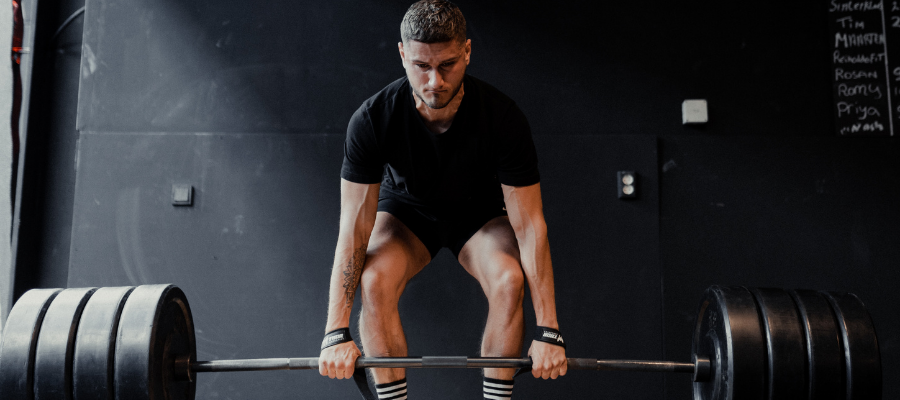
In this blog, we dive a little deeper into the Deadlift and its various variations because besides the two well-known variations (Sumo & Conventional), there are many more types of ‘Deadlifts’ you can use.
In the previous blog, we talked about the Conventional and Sumo Deadlift; if you haven’t read it yet, I recommend you read that first.
Click here to read this blog >>>>
So, grab your can of Reign or toss in two extra scoops and get comfortable because we’re going to learn something today.
I’m going to discuss the following deadlift variations with you:
- Trap Bar Deadlift
- Paused Deadlift
- Snatch Grip Deadlift
- Romanian Deadlift
- Stiff Legged Deadlift
- Deficit Deadlift
- Block Pull Deadlift
Of course, there are many more, both with Dumbbells and with chains or bands, but these are some of the most well-known and commonly used variations of the ‘normal’ Deadlift.
Trap Bar Deadlift
With this variation of the Deadlift, you don’t use a ‘normal Barbell’ but a Trap Bar (No way, really?!) There are different types of Trap Bars, but generally, the point where you grip the bar is higher than a normal Barbell, which reduces the range of motion.
For many people, a trap bar deadlift is easier to perform because the weight lies directly under your (Center of Gravity). This basically means the weight is directly beneath you, making it easier to pull because it forms a completely straight line.
This is also an advantage because it is much more ‘lower back friendly.’
- You start a trap bar deadlift with your feet about shoulder-width apart, but this can vary per person, so feel free to experiment to see what works best for you.
- Just like with another deadlift, you push your shoulder blades down and together, and keep your chest ‘up’
- Try to ‘push the ground away’ as it were
Conclusion; A good variation if you are just starting with Deadlifting because it is easier to learn and puts much less stress on your lower back. However, note that this is not an official powerlifting exercise, so you MUST NOT use it in a powerlifting competition.
Paused Deadlift
With this variation of the Deadlift you do (Sumo or Conventional), you apply a ‘Pause’ at your ‘weakest’ point. Generally, this is somewhere in the middle of the rep.
So you stop here for a moment, and believe me; that is tough, very tough. You literally pause the repetition at your weakest point, stay strong Bro.
It’s important to keep everything in your body tight. If you don’t, your back will easily round, and we know by now that this is NOT ideal and increases your risk of injury.
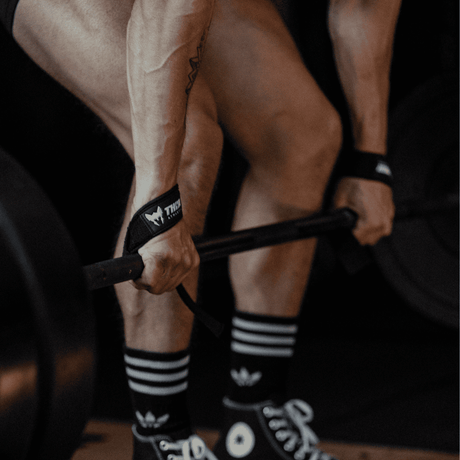
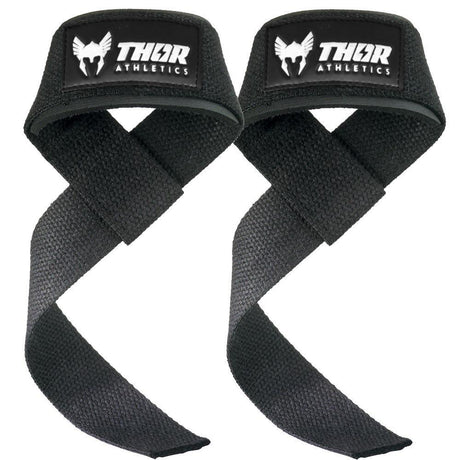
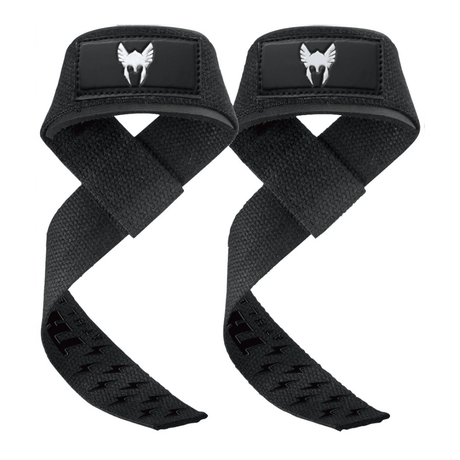
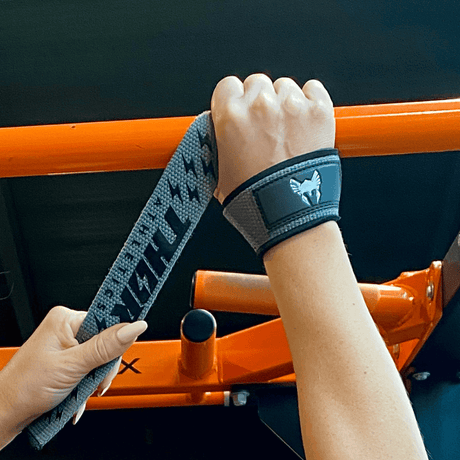
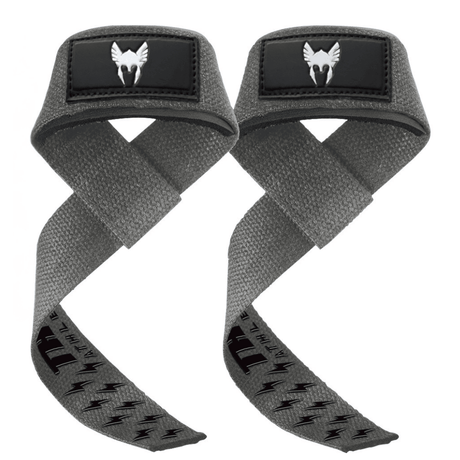
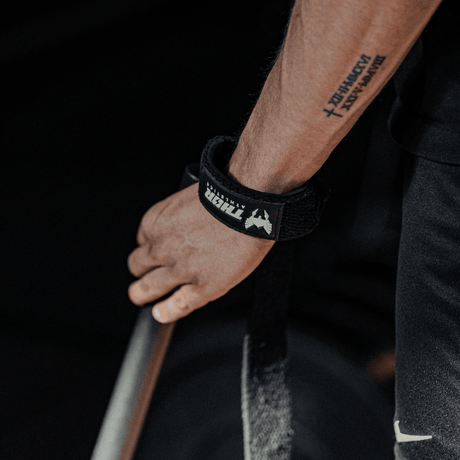
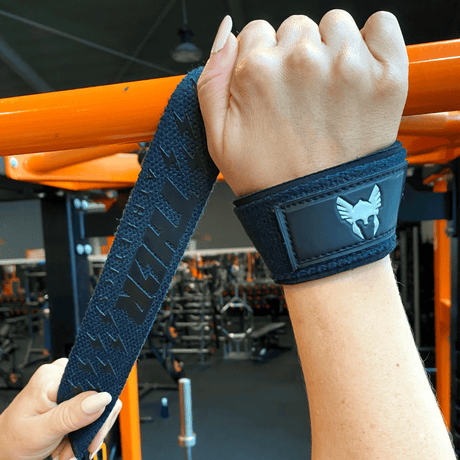
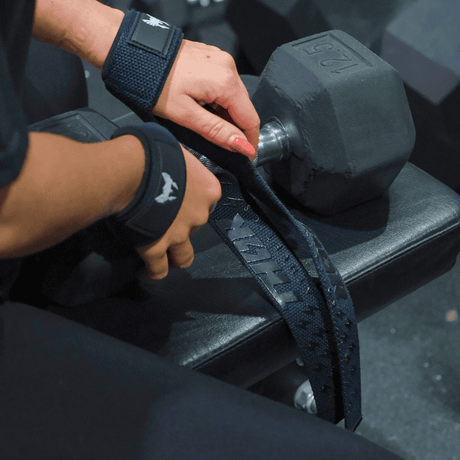
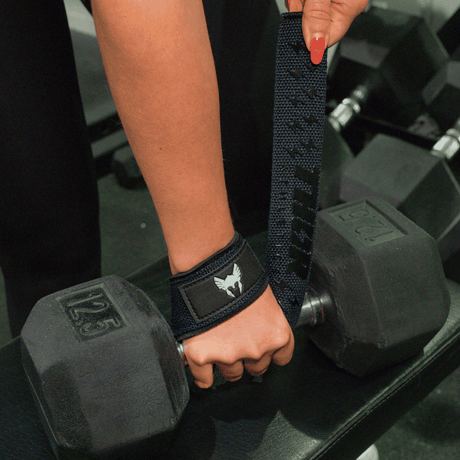
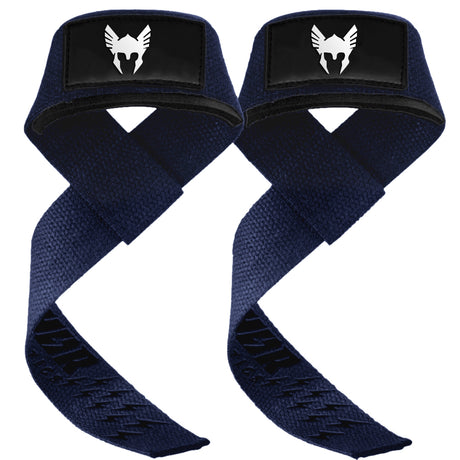
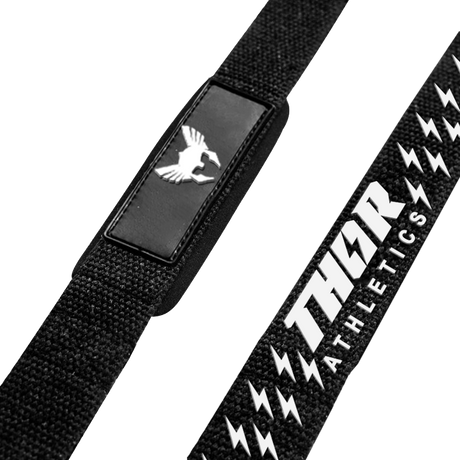
This variation is also great for your grip strength because you literally hold the bar longer with each rep. Don’t care about your grip strength and just want to increase your deadlift? Then use Straps.
Only the Thor Athletics Straps though, the others don’t work optimally, bro. Just kidding, but if you’re going to use straps, click here.
A good guideline for a pause is to hold it for at least 2 seconds. That may not seem long, but just wait until you have that weight in your hands. Believe me, then it feels just as long as when you took 3 scoops of pre-workout for the first time in the evening and then tried to fall asleep. If you know, you know.

Snatch Grip Deadlift
Let’s start with my own experience with this variation, sounds fun, right?
When I was still under the guidance of a coach who helped me become the strongest version of myself, Yes, yes, I know, very cliché, but well, you just have to deal with it.
He programmed a variation of the Snatch Grip Deadlift, which was the Snatch Grip Romanian Deadlift. Obviously not exactly the same, but that doesn’t matter.
I remember very well that when I started this exercise, first of all, the weight had to be drastically reduced, and I had muscle soreness in places I didn’t even know I had muscles for the first few weeks..
Man, oh man, this was really intense. I noticed back then that I progressed very quickly with several exercises, including my regular Deadlift.
This variation is one of my favorite exercises to complement a Deadlift..
My muscle soreness back then wasn’t surprising either; with the wider grip, you use many more muscles in your upper back than in your lower back. The range of motion (ROM) is also greater with this variation (because your arms are wider and you push your hips further back before doing a rep). Good to remember: the wider your arms, the further back your hips go.
To perform this exercise correctly, you will:
- Stand shoulder-width apart or slightly wider or narrower, this is also personal preference.
- Grip the bar wide (as wide as is comfortable for you, but keep in mind that your wrists don’t get into an awkward position). For example, you can start with your hands on the first rings on the barbell as a starting point.
- Start light, don’t go for a 1RM right away, start somewhere around a minimum of 8 reps, focus on technique and film yourself as well.
Romanian Deadlift
While we said the regular Deadlift is not suitable for optimal muscle growth, the Romanian Deadlift is quite the opposite. It is extremely suitable for maximum muscle growth.
The biggest difference and advantage of the Romanian Deadlift is that you perform the eccentric phase (the part where you lower the weight) in a controlled manner and don’t let the bar touch the ground, so you keep tension on your muscles & basically your whole body throughout the entire rep in this exercise.
You can start a Romanian Deadlift just like a regular Deadlift, from the ground. This is not really recommended because it causes extra fatigue, but it is possible.
You can also place the barbell in a rack at, say, knee height and from there get into position to start a rep.
- Stand again about shoulder-width apart.
- You lower the barbell controlled along your thighs & shins.
- Meanwhile, push your hips as far back as possible. (I used to get the tip to pretend like I was sitting on the toilet)
- Make sure your butt doesn’t drop or barely drops; if it drops a lot, you might be going too deep or maybe using too much weight?
- Keep your knees straight, DO NOT bend them.
- At some point, you’ll feel a stretch in your hamstrings; when this happens and at what depth depends on how flexible you are, of course.
- From there, you push the barbell back up from your hips and squeeze your glutes at the end of the rep.
Some people do their Romanian Deadlifts with higher reps (8-12), but there are also definitely people who do them with lower reps (3-6)
If you choose to do them heavy, it might be a good idea to use a Powerlift Belt for some extra stability & safety (AS LONG AS YOUR FORM IS GOOD)


Stiff Legged Deadlift
This is quite similar to the Romanian Deadlift but still somewhat different..
The main difference is that in this variation you start from the ground and end each repetition on the ground.
- Again, stand about shoulder-width apart.
- Start a repetition from a stretch (about knee height) or from the ground (this causes more fatigue and is therefore not recommended).
- Let the bar lower along your thighs while keeping tension on your hamstrings.
- End the repetition when the bar is on the ground, pause briefly, then start again.
- Make sure everything is tight and stays tight, and do not jerk the bar but lift from your hamstrings.
Deficit Deadlift
In this variation, you stand on a plate or another surface where you are higher than the barbell to create an extra large range of motion.
There are several advantages to this variation:
- Improved speed from the floor.
- Improvement of the starting position.
- Better hip & lower back strength development.
- More power from the legs.
- Better for muscle growth than a normal Deadlift.
Your setup is basically the same as with a regular deadlift, only now you yourself are standing a bit higher.
Block Pull Deadlift
With this variation, you can generally lift about 10-30% more weight because you pull from a block and your ROM is much smaller..
This is basically a regular Deadlift but the ‘shortened version’ because the bar is on an elevation.
Advantages of this variation:
- You can use this as an ‘overload’ exercise so your body can ‘more easily’ adapt to such heavy weights.
- For example, if you are ‘weaker’ at the lockout, you can use this at a higher elevation to improve in that area.
- Good for your grip, since your ROM is shorter and you can often pull more weight, this is a good grip strength exercise.
As you can see, there are many types of variations on the regular Deadlift.
I understand it may seem like a lot; it is not mandatory to include any of the above variations in your routine.
Of course, you can also just do Deadlifts alone and make good progress that way..
However, it can help you make slightly ‘more optimal’ progress if you add one of the above exercises to your routine, depending, of course, on what your ‘weak’ points are.
Hopefully, you learned something new in this blog about deadlift variations. If you have any questions and/or comments, I would of course love to hear from you.
Until the next blog,
Martijn