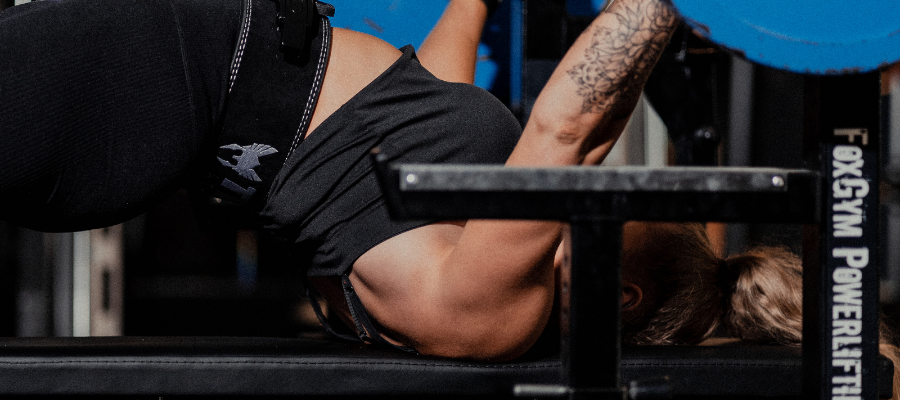
Even in normal bench pressing, there is a difference between a ‘powerlifting’ bench press set and a ‘bodybuilding’ set. In this article, you’ll read all about the different variations of bench pressing.
‘Bro, just chill, you’re making it harder for us’ Sorry man, I’m going to explain it to you, no stress.
In this blog, I will examine the different variations of bench pressing and explain them to you;
- Powerlifting and Bodybuilding Style Bench Press
- Paused
- Closegrip
- Incline
- Decline
- Guillotine
- Larsen Press
- Floor Press
- Spoto
Powerlifting & Bodybuilding Bench Press
When you bench press with a ‘powerlifting style’, you generally have a bigger ‘arch’ (the easiest way to explain this is that you have a hollow in your back, you can slide your arm under your back, a kind of ‘bridge’).
This reduces the ROM, allowing you to push more weight. You might think more weight = more growth. And that’s true up to a certain point.
If you do a ‘bodybuilding’ style bench press, your arch is much smaller or almost non-existent. Of course, you still retract your shoulders for safety and ensure a stable setup, but you leave out the big arch.
Some people also ‘tuck’ their elbows less inward than in a powerlifting style bench press. By using a smaller arch, you create a larger range of motion (ROM), which generally leads to greater activation of the muscle group you’re training. By positioning your elbows slightly more outward, you activate your chest more.
Long story short; bench pressing for a big chest or bench pressing to get as strong as possible is NOT the same.

Paused Bench Press
This variation is generally heavier than the normal version and can be applied in different ways. For example, you can pause at the bottom so the bar rests on your chest, or you can choose to pause somewhere in the middle of a rep. What you want during a pause is to try to maintain full tension throughout the set.
During a normal set, you sometimes use a bit of ‘momentum’. You know this, you’ve seen people let the bar ‘bounce’ off their chest and then immediately push again, which makes it a bit easier and takes advantage of the elasticity of the muscles.
With a pause variant, you don’t have this; you don’t use momentum and you have to really push at the hardest part of a rep to get the bar back up, which can significantly increase your bench press strength if programmed well.
Keep in mind that sometimes it can feel like you can do 2-3 more reps and then suddenly BAM, game over. Leave your ego at home and ask someone to spot you.
Closegrip
This variant is more focused on the triceps. A ‘mistake’ many make is thinking a close-grip variant has to be REALLY CLOSE. They grip the bar so narrowly that their hands are about 20cm apart.
This reminds me a bit of a Lat pulldown; the wider the grip, the wider your lats get, BRUH. WRONG.
What happens if your grip is that close? Your wrists are as crooked as the Leaning Tower of Pisa. And we learned from the previous blog that this causes enormous stress on your joints & tissues, which you don’t want.
A good guideline for a close-grip variant is about shoulder-width or slightly outside.
A point to watch with this variant is to really keep your elbows tucked and that when you do a rep and the bar is ‘lying or touching’ your chest at the bottom, your wrists are directly above your elbows; this is important.
Incline
With this variant, you focus a bit more on the upper chest. It depends a bit on what bench you use; some benches are already set at 30-45 degrees, which targets your front shoulders more than your chest.
This doesn’t have to be bad if your form is good, but it can cause some extra stress on your shoulder joints. So pay close attention to your recovery and how this exercise ‘feels.’
Personally, I NEVER do this variant. The moment I put some weight on the bar, it feels like a one-way ticket to Snap City, don’t call me, bro.

Decline
Where some people (including myself) get a ‘nasty’ feeling in their shoulder with the normal or incline bench press, this can be less with a decline and feel better, making it more suitable for people with ‘sensitive shoulders.’
A study was done among people who did the decline variant for a while and they reported that they could bench press more weight with a decline compared to a normal bench press variant.
So we can say that the decline variant is also a good option to get stronger.
Guillotine
In this variant, you lower the bar (CAREFULLY) to your neck instead of your chest. Your elbows point completely outward in this variant, stretching the chest fibers in a way that places stress over your joints.
This variant is often discouraged, as the name suggests (GUILLOTINE), because you bring the bar fully down to your neck. If you lose control of the weight, you’re in serious trouble. So be careful with this variant and ALWAYS have a spotter, even if you’re confident.
Larsen Press
This variant is a nice addition alongside your ‘competition lifts,’ in this case the regular bench press. This is because you can still handle a high intensity in terms of percentage of 1RM without creating too much extra fatigue. This is because the weight is lower since you can’t use your legs for stability/force.
It’s also harder because arching is more difficult since you can’t push with your legs, so you have to create extra stability yourself, which is naturally more challenging without legs to assist.
Floor Press
In this variant, you use the floor as a ‘bench.’ Your ROM (Range of Motion) is therefore smaller and also a bit easier on your shoulders.
It’s a good variant to overload your triceps with some extra weight.
Spoto
This variant is a kind of ‘board Press’ where you place a piece of wood or another object on your chest and rest the bar on it. In Spoto bench pressing, you don’t use an object but let the bar ‘hang’ a few centimeters above your chest.
With this variant, you increase the TUT (time under tension) and will need to focus on maintaining tension throughout the repetitions because you literally pause the bar in the air.
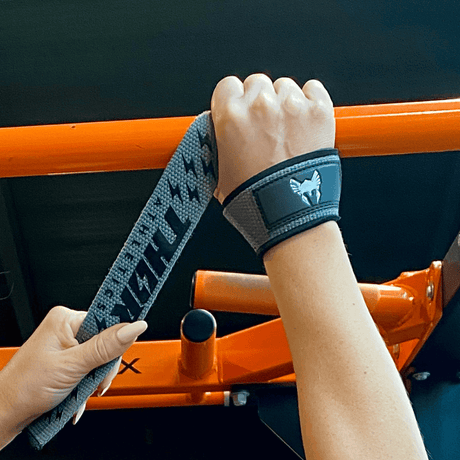
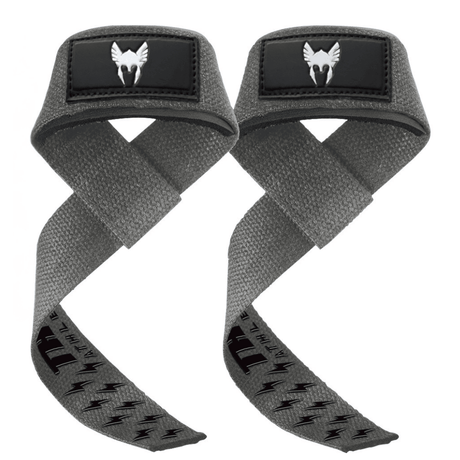
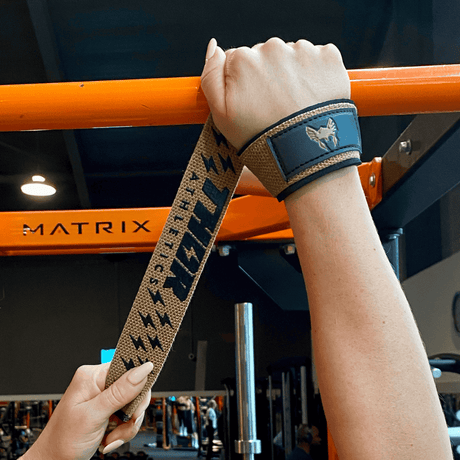
Bench safer with Thor Athletics Accessories


EXTRA TIP
Bench pressing is not necessarily the best exercise for a ‘big chest.’
Of course, it can be a good exercise for your chest, but not for everyone. There are no exercises you HAVE to do for ‘bodybuilding’.
If you are a competitive powerlifter or want to become one, then yes, you have to bench press.
But, if you just want a big chest where you can put a tray full of beer without it falling off, then you don’t need to bench press, bro.
So mainly do what you ENJOY and also pay close attention to which exercise gives you optimal progress.
Don’t switch exercises every 2-3 weeks but give it at least a few months. (Of course, not if an exercise causes pain or similar.)
CONCLUSION: Variations for bench pressing
What I noticed during the research and writing of this blog with all the different variations is that some things keep coming back in all variations.
- Maintain tension
- Generate power from your whole body & also from your legs (where possible)
- Properly ‘pack’ your shoulders
Of course, you can think of more variations; just take a look around an average Basic Fit gym (if you know, you know).
No joke, there are more variations, but these are the most common and widely used ones.
In case you haven’t read the previous blog about regular bench pressing where I explain everything about bench pressing and share 8 useful tips, click here to read it and increase your bench press by at least 20kg.
By the way, that’s 10kg gained from reading the blog and 10kg from ordering our Wrist Wraps that will help keep your wrists healthy, thank you in advance.
If you found this blog helpful, I would love it if you let us know. And if you disagree with something or if I made a mistake somewhere, please let me know as well.
See you in the next blog,
Best regards,
Martijn