
(Weighted) pull-ups are one of the most pure and honest exercises in strength sports. No machines that stabilize, no external support, no tricks. You move your own body weight through pure pulling power. And as soon as you add extra weight, pull-ups are no longer not just a bodyweight skill, but a full-fledged strength lift.
Strength, muscle mass, and real functional strength in one exercise.
In this blog you will read:
- What makes pull-ups and weighted pull-ups so effective
- Which muscle groups really do the work
- The pros and cons
- Functionality and carry-over to other lifts
- Which accessories are useful and why
What are pull-ups and weighted pull-ups?
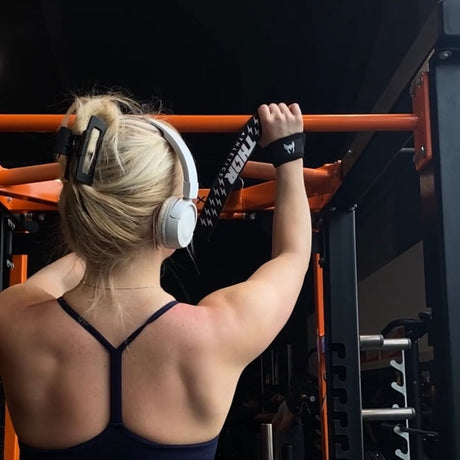
A pull-up is a vertical pulling movement where you pull yourself up to a bar until your chin (or chest) above the bar. The exercise requires a combination of strength, scapular control, core stability, and grip.
With weighted pull-ups you add extra resistance, usually via a dipping belt with weight plates. This shifts the focus from "how many reps can I do?" to how much can I move the total load in a controlled way?
For many strength trainers:
- Bodyweight pull-ups build a foundation
- Weighted pull-ups build real upper-body strength
Which muscle groups are used in (weighted) pull-ups?
Pull-ups are not "just back". With (weighted) pull-ups you mainly work your lats, but your biceps, upper back, and core determine whether your reps stay tight. The heavier you go, the more it comes down to scapular control, core tension, and grip. As soon as one of these fails, your strength decreases and the rep becomes sloppy.
Primary muscles
- Latissimus dorsi – Mainly responsible for pulling force and shoulder extension
- Biceps brachii – Especially active with supinated and neutral grips
- Brachialis & brachioradialis – Essential for elbow flexion
- Teres major – Supports lat function
Secondary and stabilizing muscles
- Rhomboids & mid/lower traps – Scapular retraction and depression
- Rear delts – Shoulder stability
- Core (Rectus Abdominis, Obliques) – Anti-swing and body tension
- Grip & forearms – Often the limiting factor
With weighted pull-ups, the activation of core, scapula stabilizers, and grip even further.

Pros and cons of (weighted) pull-ups
Advantages:
- Very high power and muscle stimulus per repetition
- Hardly any equipment needed
- Strong carry-over to deadlifts, rows, and sport
- Objectively measurable progress
- Time-efficient
Disadvantages:
- Technically difficult for beginners
- Grip can be limiting
- Elbows and shoulders require good load management
- Progress often stalls without a clear strategy
Weighted pull-ups solve this last problem largely solved.
Why are weighted pull-ups so valuable?
Weighted pull-ups are one of the best exercises for relative upper-body strength. They combine high mechanical tension with full control over the body.
Advantages compared to only bodyweighted pull-ups
- Linear progression possible (adding weight)
- More mechanical tension per repetition
- Less dependent on high reps
- Better strength transfer to other compound lifts
- Someone who can strictly do +30–40 kg pull-ups are simply strong — regardless of bodyweight.
Functionality & carry-over
- Pull-ups are not just “nice for the back,” but extremely functional.
- Carry-over to other lifts
- Deadlift: strong lats = more stable bar path
- Bench press: better scapular control
- Rows & pulldowns: direct strength transfer
Outside the gym
- Lifting, climbing, pulling
- Better body tension
- Control over own bodyweight
Weighted pull-ups strengthen these effects because they build strength under high tension, exactly where functional strength arises.
Grip variants and their effect
- Pronated (overhand) – More lat focus, slightly less biceps
- Supinated (chin-up) – More biceps, often higher repetitions
- Neutral grip – Most shoulder-friendly
- Wide grip – Less ROM, higher lat stretch
Variation in grip helps prevent overload.
Rep ranges & practical advice
There are no fixed rep ranges for “strength” or “hypertrophy.” Muscle growth and strength are determined by:
- Mechanical tension
- Proximity to Failure
- Sufficient volume over time
The number of repetitions mainly determines where the fatigue comes from, not whether a muscle grows.
Practical advice for (weighted) pull-ups
Bodyweight Pull-Ups
- Usually work in 5–12 repetitions
- Train around RPE 7–9 (1–3 reps in reserve)
- Once you consistently get >12 strict reps, adding weight is often more sensible than even more reps
- Good technique remains leading
Weighted Pull-Ups
- Usually 3–8 repetitions
- Around RPE 7–9
- Lower reps = higher absolute tension
How to choose the right rep count for (weighted) pull-ups?
Use these decision rules:
- Technique breaks down? → reps down
- Grip fails before back/biceps? → straps/grips or lower reps
- Need a lot of momentum? → weight too heavy
- No progress? → switch rep range (e.g. 4–6 ↔ 6–8)
Rep ranges are tools, not laws.
Progression: how to keep getting stronger
Recent research shows that targeted pull-up training (such as isometric, eccentric, or plyometric) can measurably improve your performance on (weighted) pull-ups. (Vigouroux & Devise, 2024)
- First increase total repetitions per week
- Then add small amounts of weight
- Use micro-loading (+1–2 kg)
- Usually keep 1–2 reps in reserve
- Deload grip and elbows proactively
Consistency beats ego here.
What are good accessories for (weighted) pull-ups?
Grip is often the limiting factor with pull-ups, especially with:
- Higher-Rep Sets
- Weighted Pull-Ups
- Higher volumes

When are accessories useful?
- If grip fails before back/biceps
- With hypertrophy-focused volume
- To keep technique tight
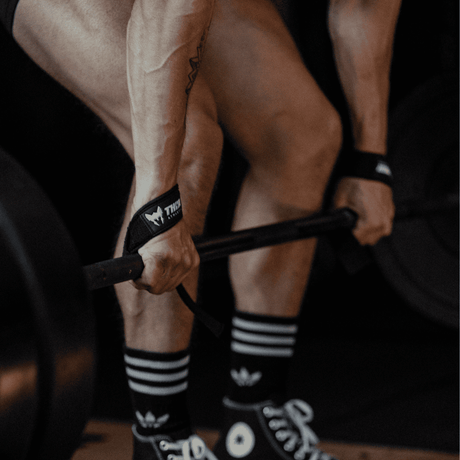
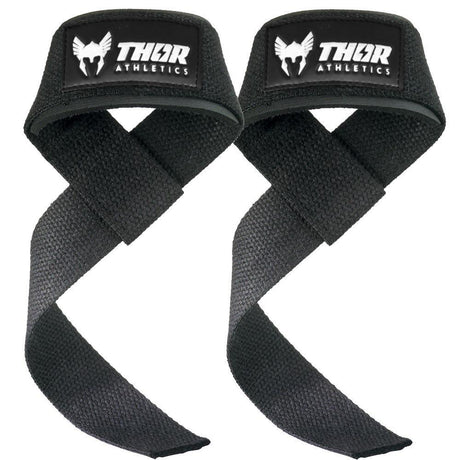
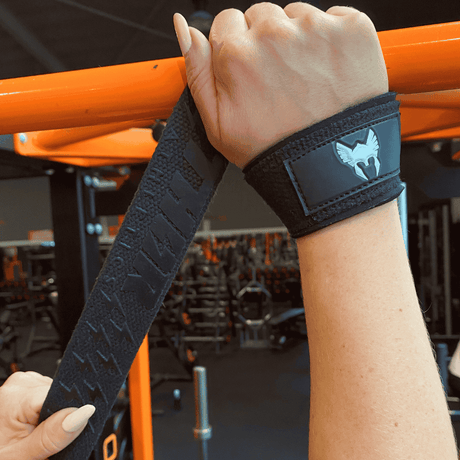
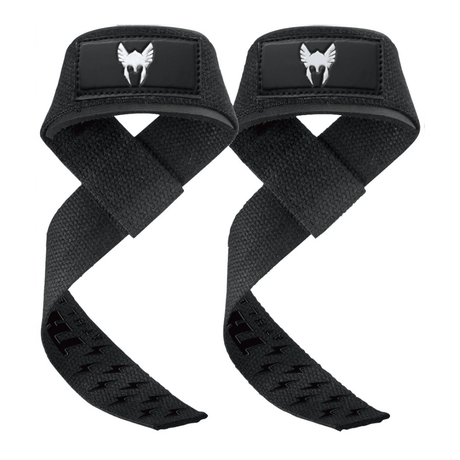
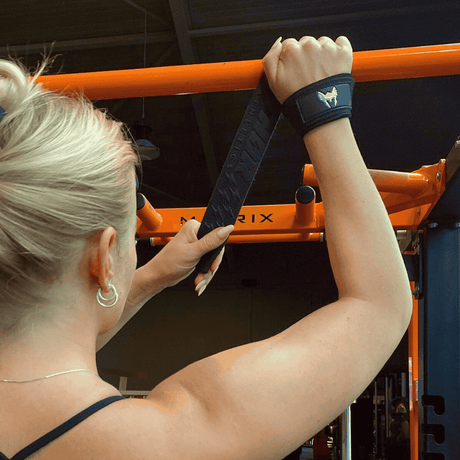
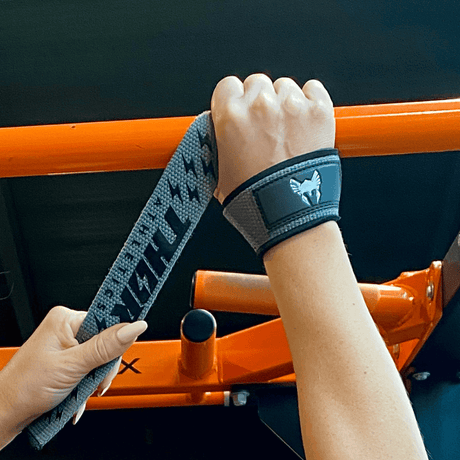
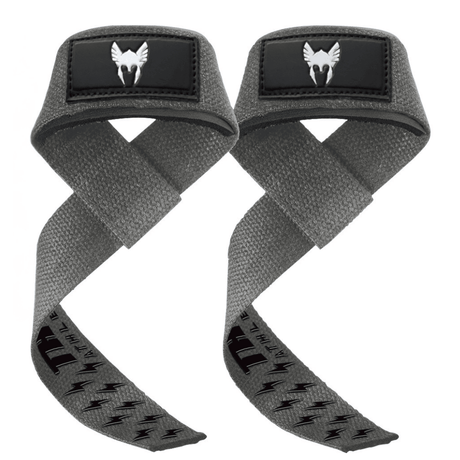
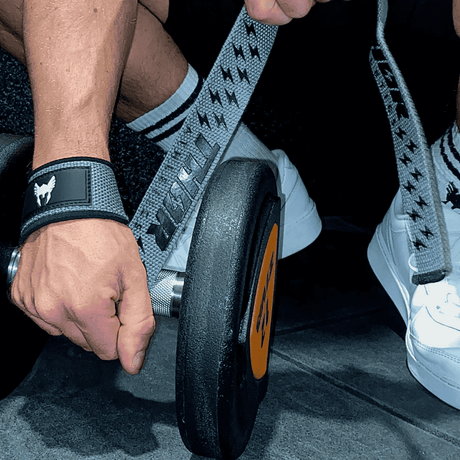
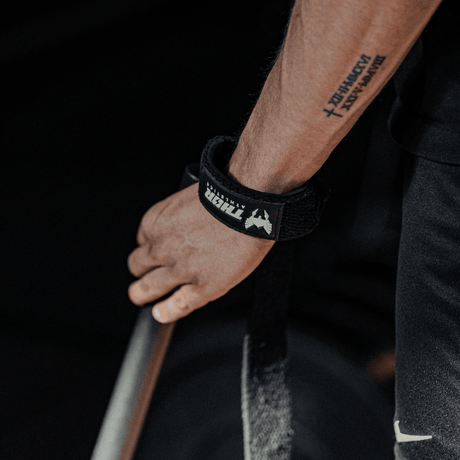
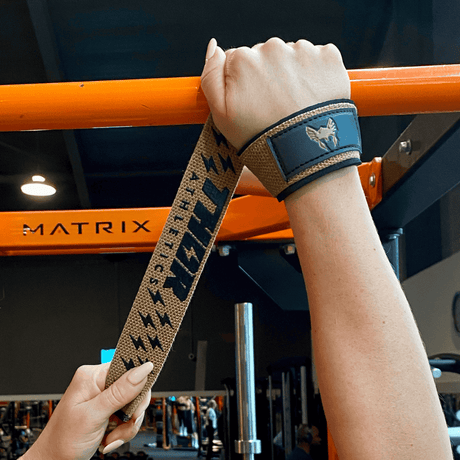
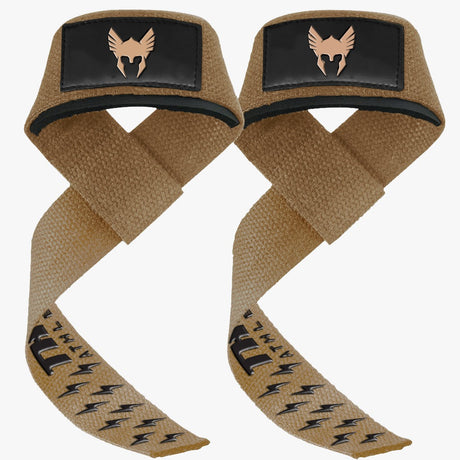
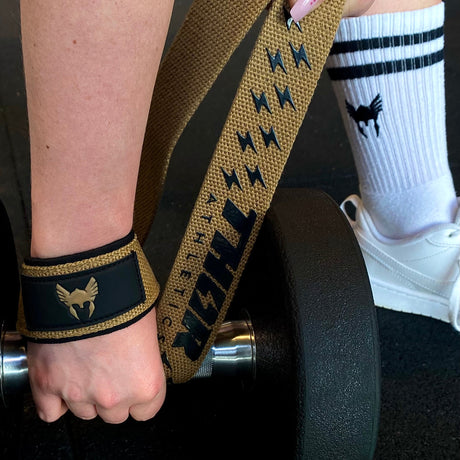
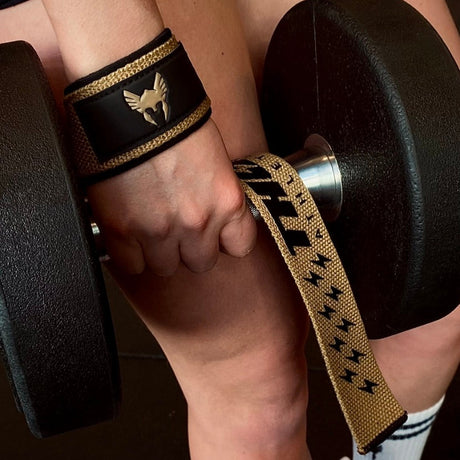
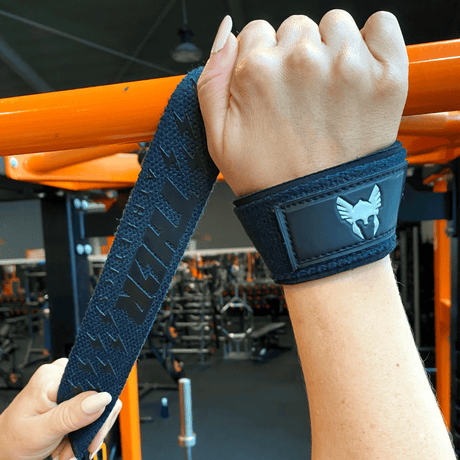
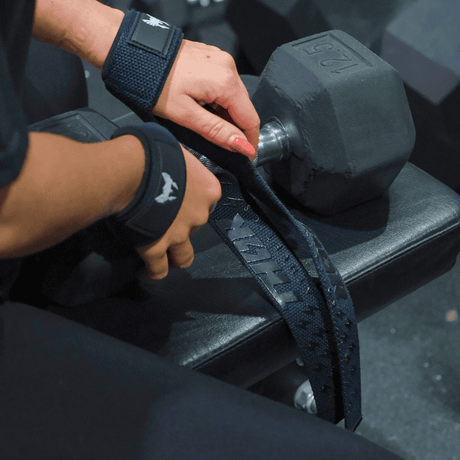
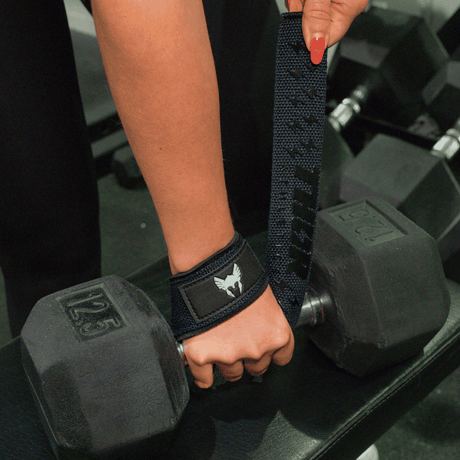
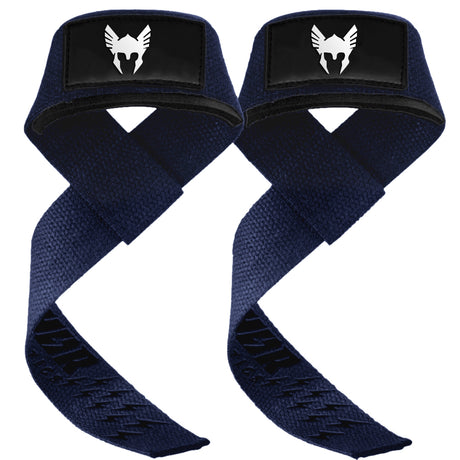
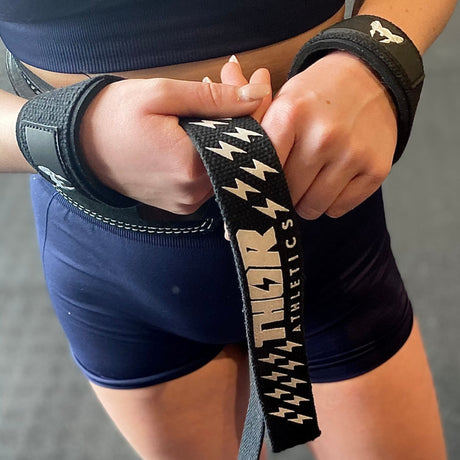
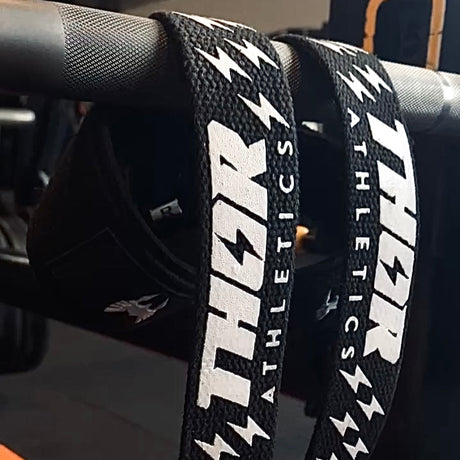
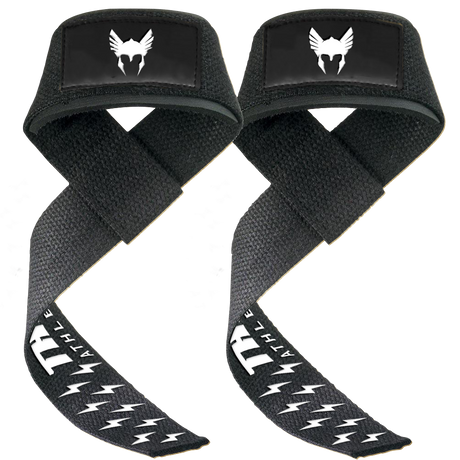
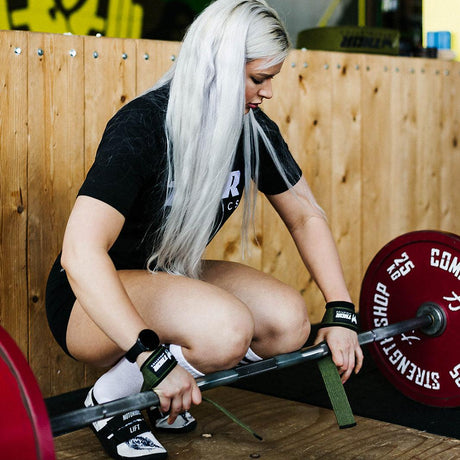
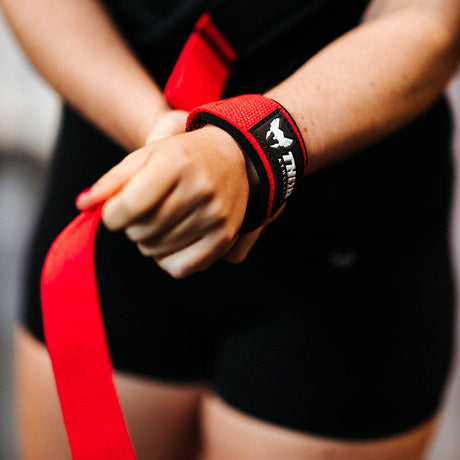
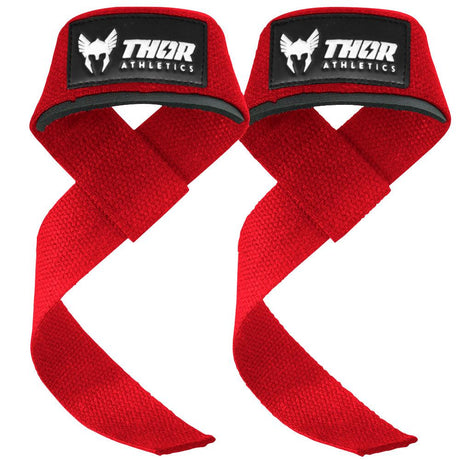
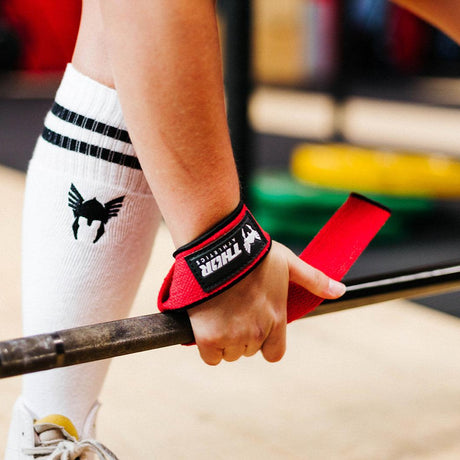
Straps or grips provide:
- The target muscles limit, not your forearms
- Training volume remains higher
- Elbows compensate less
For specific grip training, let you put them away. For muscle building, they are actually smart.
Dipping Belt
- For weighted pull-ups, a dipping belt is practically indispensable.
A good dipping belt:
- Distributes weight comfortably
- Swings minimally
- Without a belt, progress quickly becomes awkward and unstable
We sold a Dipping belt for a while, just know if we need to bring that back again.
Common mistakes with (weighted) pull-ups
- Using kipping or momentum
- Counting half repetitions
- Going too heavy too fast
- Always training to failure
- No attention to scapular control
Strict reps and controlled progress always wins.
Conclusion: what is a (weighted) pull-up?
Pull-ups and weighted pull-ups are one of the most complete exercises in strength training. They build muscle mass, strength, grip, and functional control at the same time. When smartly programmed and supported with the right accessories, they can progressively improve for years training.