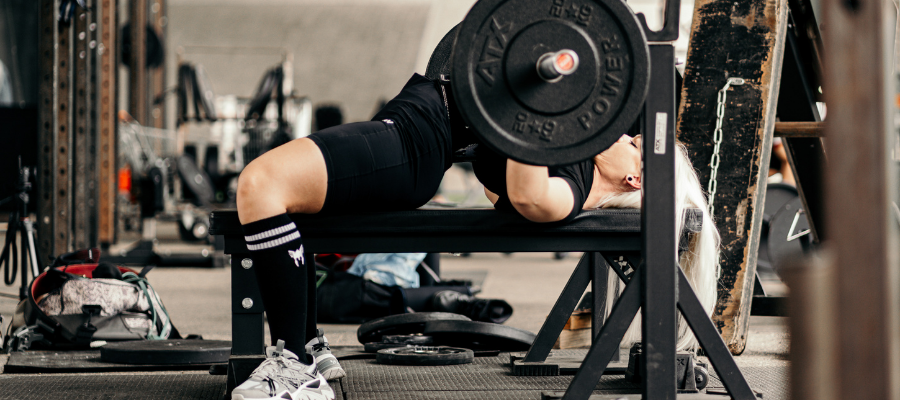
Bench pressing is about a strong setup, tight technique, and smart volume. In this blog you’ll get tips to immediately improve your bench press from technique to accessories.
Let me take you through this in your mind:
It’s Monday afternoon 4:30 PM, you just got home from work or school and you’re completely exhausted.
Then a message comes in ‘Bro, it’s chest day today’
Your eyes start to shine, your adrenaline starts pumping and you can’t wait to throw in at least 6 scoops before spending half an hour just scratching as if you have rosehip seeds under your skin ‘if you know, you know’
Your chest day buddy and you start running to the bench like Usain Bolt, which is also the only cardio you do, just to secure that bench spot.
The warm-ups feel good, you’re completely in your zone and you really feel that 100kg PR coming.
The moment has arrived, your buddy is ready behind the bench to deadlift the weight if you fail, but you expect to just crush it. You unrack the bar, lower it slowly to your chest, and push as hard as you can, the bar doesn’t move an inch and your buddy feels like he should have done some warm-up sets before his deadlift.
All jokes aside, in this blog I will explain everything about bench pressing and give you 8 tips to improve your bench press.
Which muscles do you train with bench pressing?
To be honest, when I used to bench press heavy often, I sometimes had muscle soreness in my lats and hamstrings the next day.
This is because I tensed my entire body during bench pressing.
Chest
Yes, that makes sense, right? Although bench pressing is not a typical chest exercise. It is a compound exercise, which means you train multiple muscle groups with it.
If your chest is lagging, for example, you could choose to add more isolation exercises such as a fly variation or a dumbbell press variation.
Triceps
The triceps are quite active during bench pressing, especially the short and middle tricep heads. The other head (Yes, the tricep consists of three heads, hence the name TRIcep) The long head is not fully stretched and tensed, so it will not contribute much.
It is therefore a good idea to include an overhead tricep variation in your routine to optimally train the long head of the tricep.
Shoulders
Especially the front shoulders are heavily engaged during bench pressing, and actually with every pressing movement the front shoulders are significantly tensed.
Most common mistakes in bench pressing

Set-Up
You often see people walk up to the bench, lie down, and start bench pressing. Their feet are always in different positions and nothing is tense.
When bench pressing, you want your whole body to be tense like a catapult. You basically pull the bar toward your body and create enormous tension before pushing the bar up as hard as possible.
Elbow Position
Sometimes you see people bench pressing with their elbows pointing completely toward the wall, meaning very wide. This causes huge stress on your shoulder tissues, which you want to avoid.
On the other hand, you see people whose elbows don’t match their grip width. You can tell because their wrists aren’t in a straight line with their elbows, which also puts enormous pressure and stress on your joints.
For optimal strength and safety, you want your wrists to be directly above your elbows at all times when bench pressing.
Bonus; Don’t let your training partner deadlift for you
Yep, I said it. Of course, it’s important to train ‘heavy’ and with enough intensity, but it’s neither necessary nor wise to have your buddy deadlift your last 3 reps.
First of all, it’s very injury-prone if you push your sets so far that you need a spotter every time, and it also means you recover much less effectively.
Make sure you train heavy enough that you have 1-4 reps left before stopping.
8 Tips to help you improve your bench press
Tip 1
You’re still training like a typical ‘BRO’. You have a chest day / back day / leg day, etc., and you train each muscle group once a week to complete failure.
Train your bench press more often. Strength is a skill. Suppose you want to learn to play the piano well, would you practice once a week? No, man, you’d play for three hours every day until your fingers almost fall off to get as good as possible. I’m not saying you should go from training your bench press once a week to six times a week, but if you’re currently doing it once a week, you can gradually build up to twice a week.
Of course, make sure to adjust your volume accordingly and don’t just double everything. You also want to recover, so pay close attention to that.
Tip 2
Use lifting accessories.
You didn't expect it, of course, but using lifting accessories can definitely help you make better and faster progress.
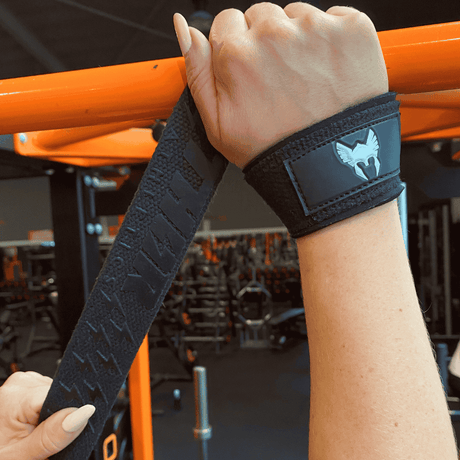
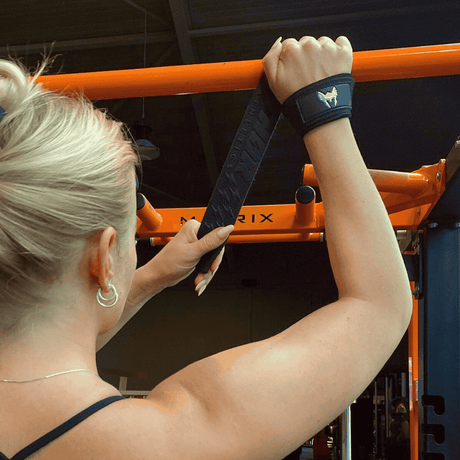
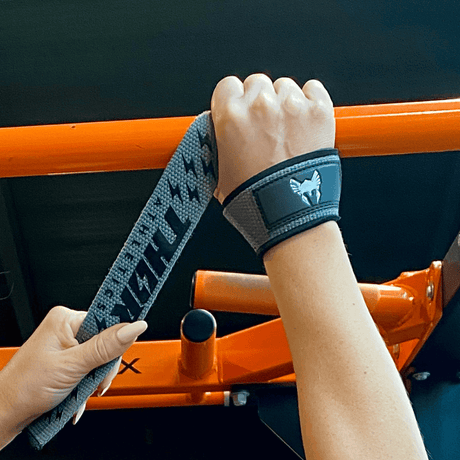
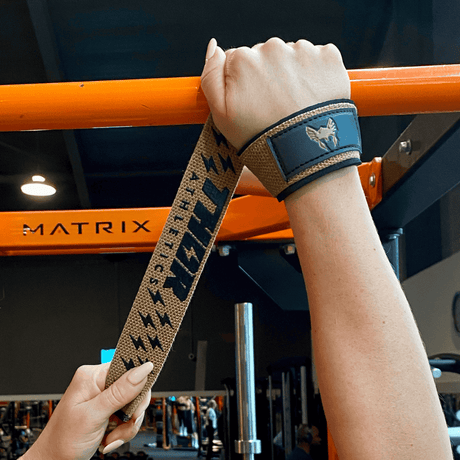
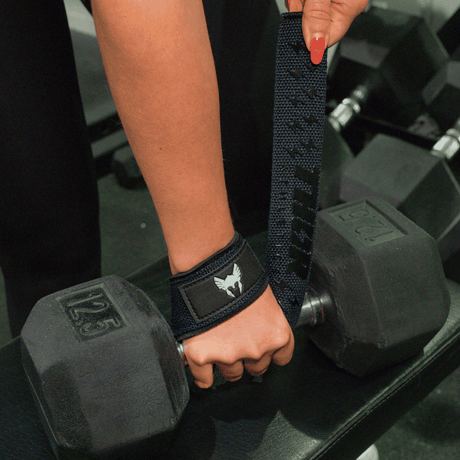
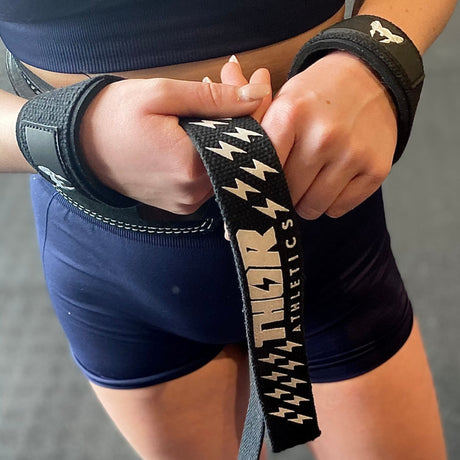
Wrist wraps are often used when benching. If you want to know more about wrist wraps, click here.
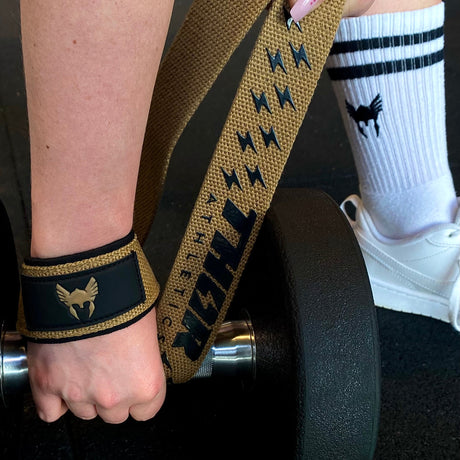
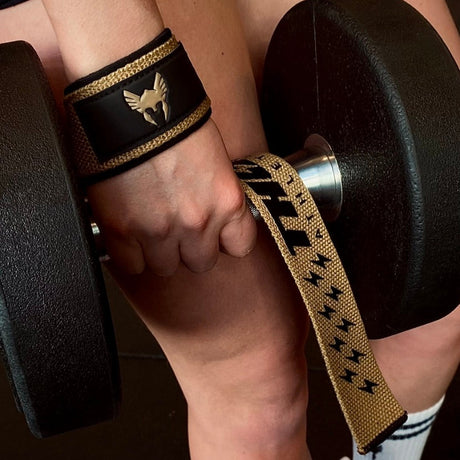
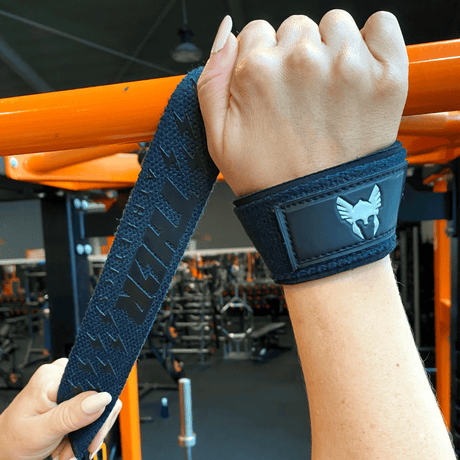
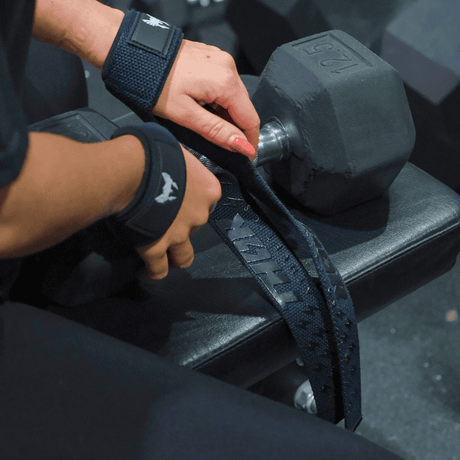
Because your wrists take a big hit when it comes to ‘pressure’ on the joints, wrist wraps can help keep your wrists in an optimal position and provide extra support. This allows you to focus more on generating maximum strength.
Sometimes a Powerlift Belt is used when benching to brace optimally. Try it, it might work for you too. If you want to know more about the Powerlift Belt, click here.
Tip 3
Make sure your technique is ‘on point’.
How often do you see people lying down as if they’re on a bed?
If you want to bench optimally, your whole body is tense and you have a slight arch in your back. Tighten your glutes and keep your feet flat on the ground.

Tip 4
Experiment with different grip widths.
Yes, the closer you go, the more tricep dominant it is, but that doesn’t mean you have to go ultra wide.
It could very well be that you perform better with a slightly closer grip than a wider one, or vice versa.
Generally, people are stronger with a wider grip because the ROM (Range of Motion) is smaller, but maybe you’re an exception and stronger with a narrower grip.
Tip 5
You don’t have ‘enough’ muscle mass. It’s said everywhere, but it’s really true: a bigger muscle is a stronger muscle.
There’s a good chance that if you have a chest like Arnold’s, there’s also a lot of strength in it.
So make sure that besides bench pressing, you do enough other exercises that make your chest grow. Don’t forget to eat enough by the way.
Tip 6
This is a personal experience tip.
I’ve tried quite a few things myself and often followed the scientific fitness industry because that’s usually optimal, science right?!
This worked for me so far. After a while, I realized that I don’t perform well training at RPE 6/7 leaving 3-4 reps in the tank to do more volume. I definitely push my sets to RPE 8-9.
If you do 15-20 sets per week, you won’t be able to recover well for long and you’ll run into all kinds of problems.
Good story Martijn, but what are you trying to say?
Listen to yourself, what do you enjoy?
Do you like to stop 3-4 reps before failure and prefer more volume? GREAT. Then focus on multiple sets per week. Keep in mind that you should actually be able to add a rep here and there or some weight every week or improve your technique.
Are you like me and like to push your sets a bit further? NICE. Just make sure you don’t do TOO MANY sets.
I have been guilty of this, and believe me, it’s not pleasant.
For some context; I’m currently doing about 10-12 sets for chest per week and making great progress.
Of course, this doesn’t mean you can’t change this; your stress levels or the amount of time you can or want to spend in the gym can also change, and you can respond to that.
Tip 7
Film yourself.
Again, film yourself to see where you can make progress. And definitely send your videos to people who can help you or post them on your social media asking for tips.
Tip 8
Increase or decrease your volume.
It may be that you do TOO LITTLE or TOO MUCH.
Do you live at home, go to school, have no job, and get cooked for every evening and have a life ‘without’ stress?
Chances are you can recover well from quite a bit of volume. Quite a bit is, of course, very personal. A rough estimate is somewhere between 15-20 sets per week.
Are you under a lot of stress? Think about your job / relationship drama / financial problems, etc.? Then expect that your recovery is not optimal and that it’s better to reduce your volume to, for example, 10 sets per week.
Do you notice that you make better progress because of this? GREAT. You can then, for example, add 1 set per week to see how much you can recover from.
The same applies if you do TOO MUCH, reduce your volume until you notice you can recover well and make progress again.
Train bench press with our accessories


That was the end of this blog, if you found it helpful or managed to set some nice PRs or progress on the bench, show them to me on insta?! @thorathletics
Until the next blog,
Martijn